
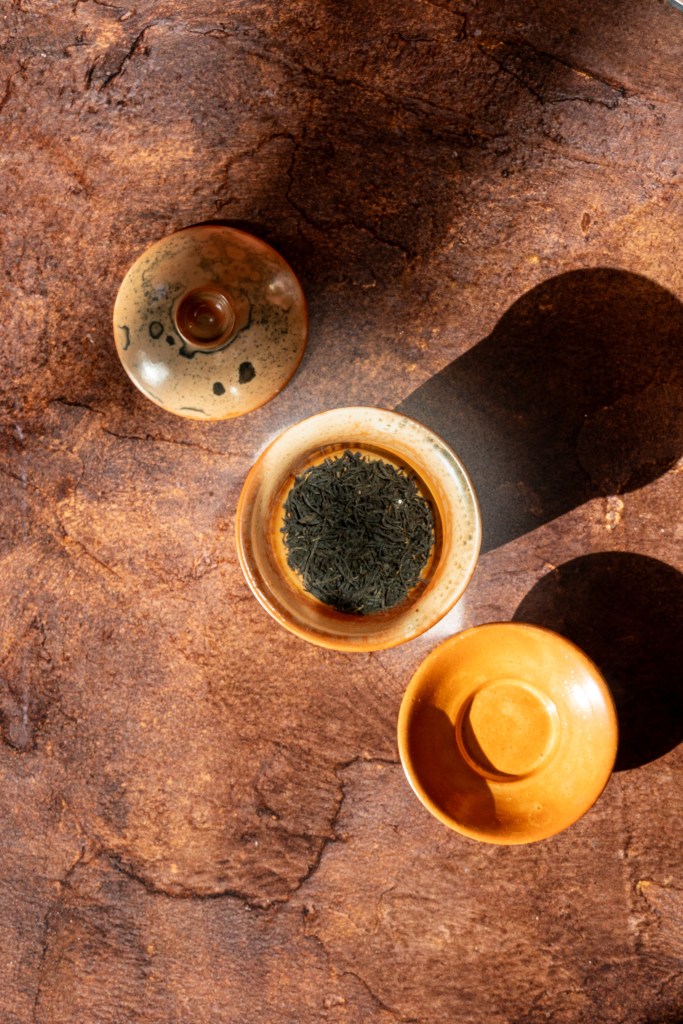
Exploring teas that seamlessly blend tradition with innovation is always a delight, and the Gardenia Red from Volition Tea’s Trapped in Amber series is a perfect embodiment of this harmony. This tea invites us into a world where the rich depths of Zhenghe Red meet the delicate allure of gardenia blossoms, resulting in an experience that’s comforting and enchanting.
A Meeting of Minds and Gardens
The journey with Gardenia Red begins once again in the verdant hills of Songxi, Fujian, where the Xie brothers cultivate their organic tea paradise. Their dedication to biodiversity and sustainable farming practices lays the foundation for teas that are rich in character and story.
For this creation, Annie Xiang collaborated with the Xie brothers and their local friends—artisans who possess a deep understanding of traditional scenting techniques. Together, they sought to enhance the natural qualities of the Zhenghe Red by infusing it with organically grown gardenia petals, a process steeped in both artistry and science.
The Art and Science of Scenting with Gardenia
Scenting tea with flowers is a time-honored tradition in Chinese tea culture, requiring meticulous attention to detail to achieve the perfect balance of aromas and flavors.
1. Selection of Ingredients
- Tea Base: Zhenghe Da Bai cultivar, known for its smoothness and subtle sweetness, provides an ideal canvas.
- Gardenia Petals: Freshly harvested, organically grown gardenia flowers are chosen for their intoxicating fragrance and purity.
2. The Scenting Process
- Layering Technique: Tea leaves and gardenia petals are layered in alternating strata. This allows the tea leaves to absorb the volatile aromatic compounds the flowers release.
- Temperature and Humidity Control: The scenting environment is carefully regulated to preserve the integrity of both the tea leaves and the flowers.
- Duration: The scenting process occurs over several hours, sometimes repeated multiple times to achieve the desired intensity.
- Separation: After scenting, the spent gardenia petals are meticulously removed to prevent any bitterness or off-flavors.
3. Chemical Interactions
- Volatile Aromatic Compounds: Gardenia flowers release compounds like linalool and methyl benzoate, which the tea leaves absorb, imparting floral notes.
- Synergy of Flavors: The natural sweetness of the Zhenghe Red harmonizes with the floral aromatics, creating a complex and layered flavor profile.
Tasting Experience
Using my 150 mL gaiwan, I measured 5 grams of Gardenia Red and heated water to 190°F (88°C).
Visual Examination
The dry leaves are slender and well-twisted. There’s a subtle sheen, hinting at their careful processing. A few delicate gardenia petal fragments remain, adding a touch of visual intrigue.
Aroma of Dry Leaves
Bringing the warmed gaiwan to my nose, I’m immediately enveloped by a heady floral fragrance. The gardenia’s sweet and lush scent is prominent, intertwined with the honeyed undertones of the red tea.
First Infusion
- Liquor Color: A clear, gold that glows warmly.
- Aroma: The steam carries an elegant bouquet of gardenia, reminiscent of a blooming garden at dawn.
- Taste: The initial sip is delicate yet full of character. The floral notes are front and center—soft, sweet, and lingering. Beneath the gardenia, the tea offers hints of honey and a subtle nuttiness.
- Mouthfeel: Silky smooth, light on the palate.
- Aftertaste: A gentle sweetness persists, with the floral essence gradually fading.
Second Infusion
- Liquor Color: Slightly deeper gold.
- Aroma: The gardenia fragrance remains strong, now complemented by a whisper of fresh hay.
- Taste: The tea’s body develops, introducing mild notes of hay and a touch of ripe fruit. The interplay between the floral and tea notes becomes more balanced.
- Mouthfeel: Soft and soothing.
- Aftertaste: Clean and refreshing, with a pleasant floral linger.
Third Infusion
- Liquor Color: Consistent with the second infusion.
- Aroma: The floral aroma softens, allowing more of the tea’s natural scent to emerge.
- Taste: The gardenia notes gently recede, unveiling the Zhenghe Red’s inherent sweetness and subtle mineral quality.
- Mouthfeel: Light and crisp.
- Aftertaste: A delicate echo of both gardenia and honey.
Reflecting on the Experience
Gardenia Red is a masterful blend that showcases the delicate art of scenting tea. The scientific precision in controlling the absorption of floral compounds results in a brew where neither element overwhelms the other. Instead, they coexist gracefully, each sip offering a new nuance to appreciate.
Understanding the chemistry behind the scenting process enhances my appreciation. The absorption of volatile aromatic compounds is not just a matter of proximity but of careful timing, temperature, and humidity—variables that the artisans have expertly managed.
Pairing Suggestions
This tea’s gentle elegance makes it a delightful companion to:
- Light Pastries: Such as madeleines or scones.
- Fresh Fruits: Slices of pear or melon.
- Quiet Moments: Ideal for reflective afternoons or sharing with close friends.
Conclusion
Gardenia Red is a sensory experience that bridges the gap between nature and craftsmanship. It reminds us how traditional techniques can create something timeless and extraordinary when applied with skill and passion. Come back as I delve into the last tea in the Trapped in Amber series, where we’ll explore the herbaceous qualities in Pagoda Red!
Steep well,
-Marco


 STEAP'D
Leave a comment