Our journey through the Trapped in Amber series concludes with the intriguing Pagoda Red—a tea that artfully combines the robust character of Zhenghe Red with the refreshing qualities of Eau de Cologne mint and anise hyssop flowers. This tea represents a cross-cultural collaboration that brings together the best of both worlds.
Cultivating Connections Across Continents
Pagoda Red was born in partnership between the Xie brothers in Songxi, Fujian, Annie, and The Roof Crop, an urban farm in Chicago, IL. This collaboration symbolizes a fusion of traditional Chinese tea cultivation with modern, sustainable urban farming practices.
The Roof Crop specializes in sustainably grown herbs atop city buildings, turning unused spaces into green havens. Their contribution of Eau de Cologne mint and anise hyssop introduces unique flavor dimensions to the Zhenghe Red base.
The Science of Herbal Blending
Integrating herbs with tea requires an understanding of how different components interact to create a balanced flavor profile.
1. Selection of Herbs
- Eau de Cologne Mint (Mentha x piperita citrata): Known for its citrusy, bergamot-like aroma, adding brightness.
- Anise Hyssop (Agastache foeniculum): Offers sweet licorice notes with a hint of floral complexity.
2. Blending Process
- Proportion Control: Precise ratios ensure the herbs enhance rather than overpower the tea.
- Dry Blending: Herbs are dried and carefully mixed with the tea leaves, allowing flavors to meld over time.
- Moisture Content: Monitoring is crucial to prevent mold growth and maintain quality.
3. Flavor Compound Interactions
- Menthol and Linalool: From the mint, contributes to the refreshing mouthfeel and aroma.
- Anethole: From anise hyssop, imparts sweet, licorice-like flavors.
- Synergy with Tea Polyphenols: The antioxidants in tea interact with the herbal compounds, creating a more complex taste.

Tasting Experience
With my 150 mL gaiwan, I used 5 grams of Pagoda Red and heated my water to 200°F (93°C).
Visual Examination
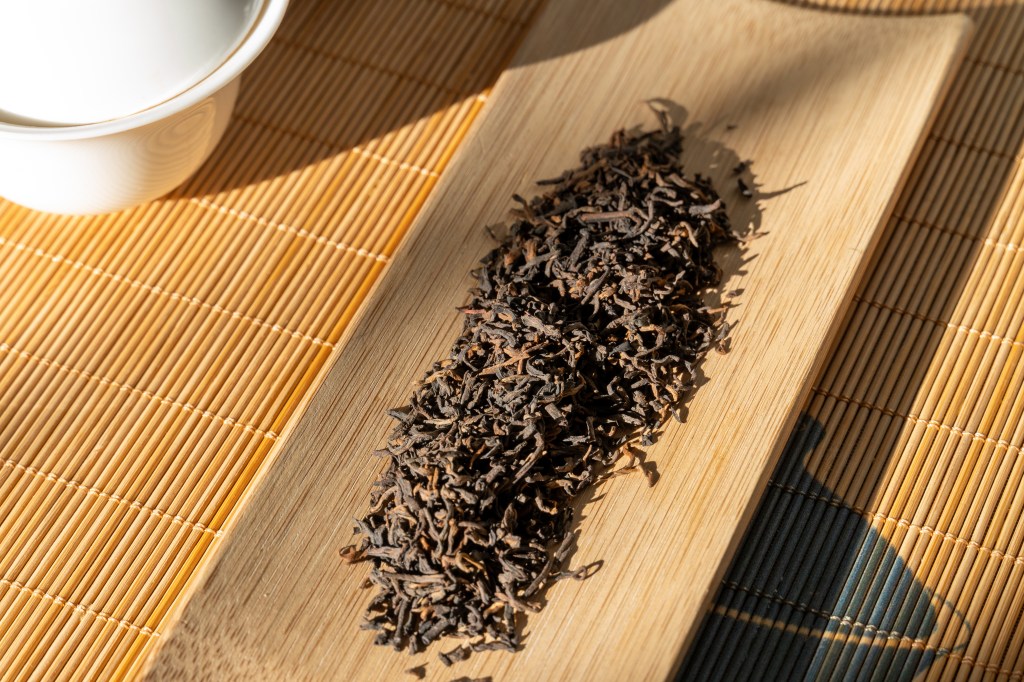
The dry blend is visually striking. Dark tea leaves are interspersed with vibrant green mint and delicate purple anise hyssop flowers, creating a mosaic of colors.
Aroma of Dry Leaves
Inhaling the aromas from a warmed gaiwan, I’m greeted by an invigorating scent. The crispness of mint is immediately apparent, uplifted by sweet floral notes from the anise hyssop, all grounded by the warm undertones of the red tea.
First Infusion
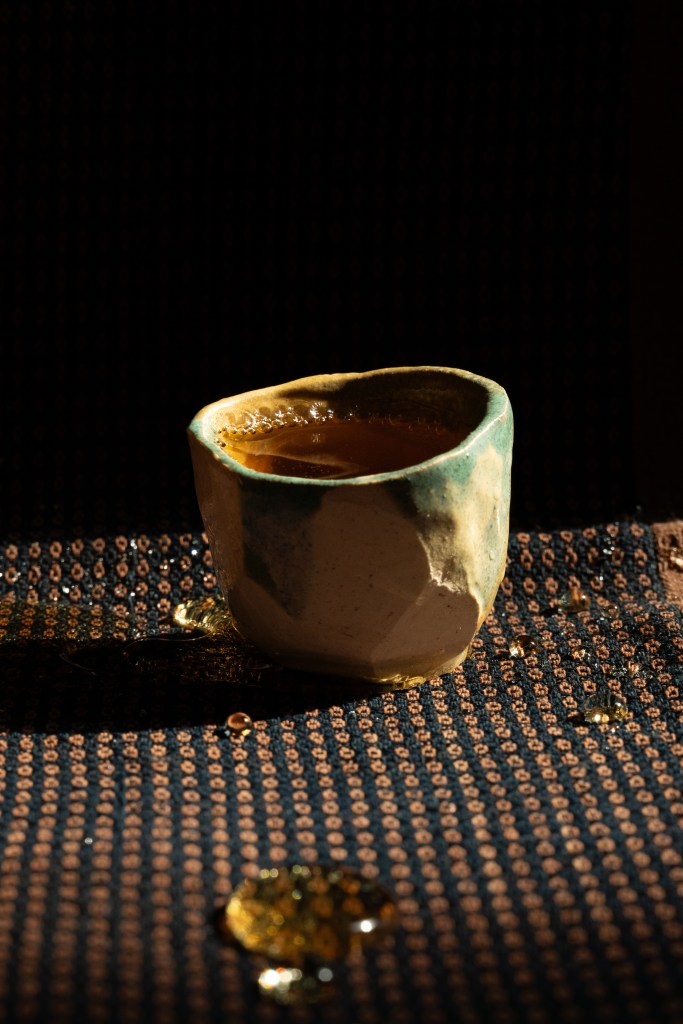
- Liquor Color: A bright amber with a hint of greenish tint from the herbs.
- Aroma: A refreshing bouquet of mint leads, followed by subtle sweet notes.
- Taste: The first sip is revitalizing. The coolness of the mint awakens the palate, while the anise hyssop adds layers of sweetness and mild spice. The Zhenghe Red provides a smooth, malty base that ties the flavors together.
- Mouthfeel: Crisp and clean, with a slight cooling sensation.
- Aftertaste: A lingering freshness from the mint, balanced by the sweetness of the anise hyssop.
Second Infusion
- Liquor Color: Consistent with the first infusion.
- Aroma: The herbal aromas harmonize further, with the mint mellowing slightly.
- Taste: Flavors become more integrated. The tea’s malty notes are more pronounced, complementing the herbal elements. There’s a subtle honeyed sweetness emerging.
- Mouthfeel: Smooth, with less pronounced cooling.
- Aftertaste: Balanced, with both tea and herbs leaving a pleasant finish.
Third Infusion
- Liquor Color: Slightly lighter.
- Aroma: The tea’s natural aroma begins to take the forefront.
- Taste: The mint and anise hyssop gently recede, allowing the underlying qualities of the Zhenghe Red to shine—a mild sweetness with hints of cocoa.
- Mouthfeel: Light and refreshing.
- Aftertaste: Clean, with a gentle reminder of the mint.
Reflecting on the Experience
Pagoda Red is a testament to the possibilities that emerge when tradition meets innovation. This blend of herbs and red tea creates an invigorating and comforting experience.
From a scientific perspective, the interplay of flavor compounds from the herbs and tea creates a synergy that enhances the overall profile. The menthol in the mint provides a cooling sensation and stimulates the trigeminal nerve, contributing to the perception of freshness. Anethole from the anise hyssop adds sweetness without sugar, engaging different taste receptors.
Pairing Suggestions
This vibrant blend pairs well with:
- Lemon Shortbread Cookies: Accentuate the citrus notes of the mint.
- Goat Cheese Crostini: The tea’s freshness complements the tangy creaminess.
- Morning Routines: An excellent choice to start the day on a refreshing note.
Conclusion
Pagoda Red showcases how thoughtful blending can elevate a tea beyond its traditional boundaries. It’s an exploration of flavors that respects the origins of each ingredient while creating something entirely new. The collaboration between the Xie brothers, Annie, and The Roof Crop reflects a shared commitment to sustainability and innovation.

Final Thoughts
The Trapped in Amber series is a journey through the possibilities that arise when passion, expertise, and creativity converge. Each tea tells a story of the people and processes that bring it to life.
From the barrel-aging alchemy of the Barrel-Aged Red to the floral embrace of Gardenia Red, and the invigorating blend of Pagoda Red, these teas invite us to explore and appreciate the depth and breadth of what tea can be. Annie continues to find innovative ways to build a tea experience deeply rooted in humanity. She strives to help tea drinkers everywhere develop a deep understanding and appreciation of tea and its producers.
I hope sharing these experiences inspires you to delve deeper into the world of tea, to savor each cup for the rich tapestry of culture, science, and artistry it represents.
Steep well,
-Marco


 STEAP'D
Leave a comment