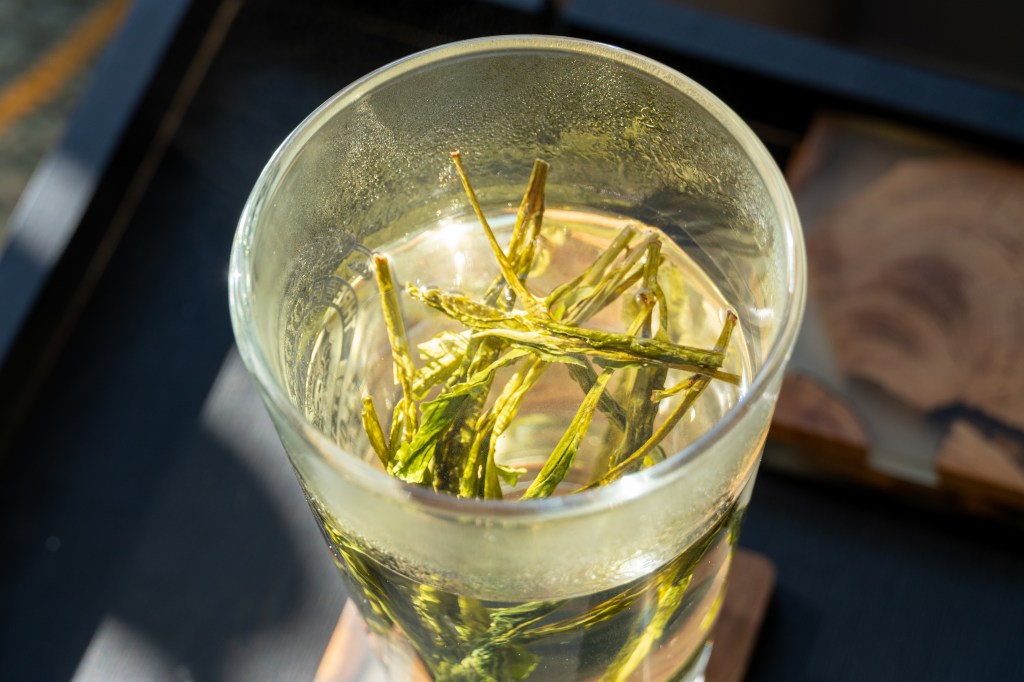
Taiping Houkui is a visually striking tea, known for its distinctive long, pressed “spears.” The name itself carries significance and is associated with an orchid-like aroma.
I enjoy teas like this because they reward a deeper understanding of their context. When we grasp what defines Houkui, we can appreciate it more fully. The tea either meets our expectations or it doesn’t. When Rivers and Lakes Tea released their Houkui, I was eager to experience its rich context and depth. What I tasted offered enlightening moments that I feel compelled to share.
I’d like to explore with you the following:
- What “authentic Taiping Houkui” means in practical terms
- Why Rivers and Lakes went looking for their producer and garden style
- What to watch out for before the first sip
- My grandpa-style tasting, sip by sip
“Authenticity” in Houkui
Taiping Houkui is a Chinese green tea with a protected geographical indication. This designation is important because “Houkui” signifies not only a specific style and shape of tea but also its region of origin. Characterized by its delicate orchid aroma, elongated pressed leaves, and distinctive leaf shape. The strong connection to its heritage fosters pride and appreciation for Taiping Houkui, establishing a unique identity within the tea industry.
The search
River and Lakes searched for their Houkui in the core production villages of Yanjia, Hougange, and Houkeng.
They describe a sourcing search focused on:
- Seed-propagated heirloom gardens managed as 生态 shengtai (ecological and pesticide-free)
- Local plant material such as 土种 Tuzhong, or 柿大种 Shi Da Zhong variety
- A minimally mechanized, small-scale operation
They landed with the Ye family in Houkeng. While Shi Da Zhong is the standard and preferred cultivar, Tuzhong (土种, “Local Seed” or landrace) refers to the native, seed-propagated heirloom trees often found in older, high-quality production areas. Both cultivars are of the highest quality in their own right, but they differ in their flavor profiles and agricultural origins.
1. Shi Da Zhong (柿大种/柿大茶 – Persimmon Large Leaf)
The main cultivar used for premium, classic Taiping Houkui. It has huge, thick but soft, downy leaves with the signature “two knives and one pole” shape. The cup leans clean and consistent. Expect light orchid-like florals, bamboo, gentle nuttiness, a velvety body, and low bitterness.
2. Tu Zhong (土种 – Native/Landrace Cultivar)
Older, seed-grown local trees, often from historic areas. It varies more from tree to tree, so flavors run less uniform and often feel more “wild.” The cup tends to go deeper and more layered, with mineral or rustic edges. It’s rarer, often sourced from small-batch, ecological, or hand-picked production, and it costs more.
For the classic, elegant, floral, and velvety taste of Taiping Houkui, Shi Da Zhong is the quintessential choice. If you’re looking for a more complex, nuanced, and “primitive” or wild flavor profile, Tu Zhong (often labeled as “Heirloom” or “Old Tree”) is preferred. Both cultivars are top-tier when produced in the core Houkeng area.
The leaf standard is part of its identity.
Houkui deliberately uses a large 1-bud, 2-leaf picking standard, labeled as (bianxing Lu cha), a flattened and pressed green tea. The long spear shape and leaf mass will influence the rate of extraction, mouthfeel, and how our evolution in the session plays out.
Shaping flavor
Premium Houkui in this region is described as half-handmade, with simple machinery guided closely by human hands at the most pivotal moments, inspiring respect for the craftsmanship involved.
What makes the Ye family stand out is:
- Shaping and straightening are completed almost entirely by hand
- Screen pressing holds the spear shape
- Baking the leaves three times
- Utilizing a wood-fired oven, where many producers have moved to electric
Understanding these facts in production allows us to later focus on the elements of structure, clarity, and the finish of the tea. Rather than the intense, immediate fragrance associated with machine-pressed teas, there are distinct characteristics to consider.
Risk of “Juice Loss”: Some modern machine-pressing techniques can be overly aggressive, squeezing out the nutrient-rich juices before they can dry. It often results in a flatter taste and reduced potency in the final cup.
Textural Quality: The pressing process produces a darker green leaf with a unique surface texture, contributing subtle “green bamboo” or “savory soybean” notes to the liquor.
Advantages of the Specialized Roasting Process: Unlike the standard single-stage drying used for many green teas, Houkui employs a multi-stage roasting process in wooden cabinets or over charcoal at varying temperatures. By moving the tea through different temperature zones (e.g., from 110°C to 60°C), the producer can effectively control moisture. This technique helps prevent the leaves from becoming brittle while keeping the core perfectly dry.
Aroma Enhancement: This specialized roasting process triggers Maillard reactions that transform the raw vegetal notes into complex, toasty, nutty, or chestnut-like aromas without burning the delicate floral components.
Long-Term Stability: In the final stage, the tea is wrapped and stored in pots with limestone, which absorbs any remaining moisture. Doing so stabilizes the flavor and allows the tea to acquire a subtle bamboo scent from the padding.
Now that we’re all set, let’s dive into the delicious experience ahead!
My session setup
Tea: 2025 Taiping Houkui
Vessel: tall glass, 10 oz.
Leaf: 12 spears
Water: 95°C
Harvest: April 25, 2025
Producer: Ye family
Garden: Tuzhong heirloom bushes, 600-700 meters
Tasting notes, sip by sip
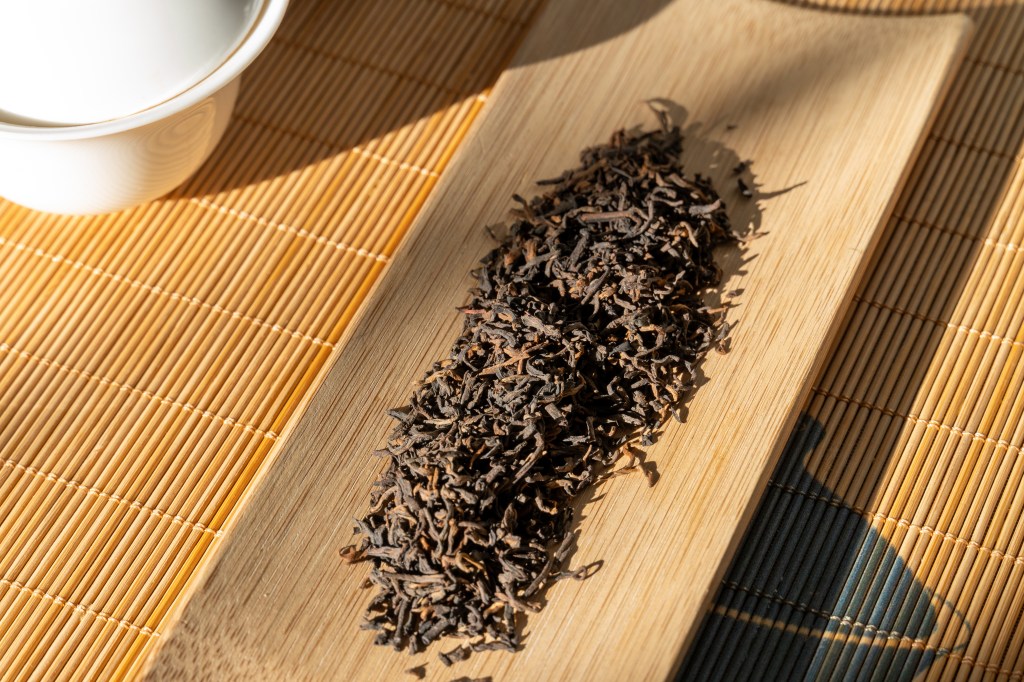
Dry Leaf
Visual
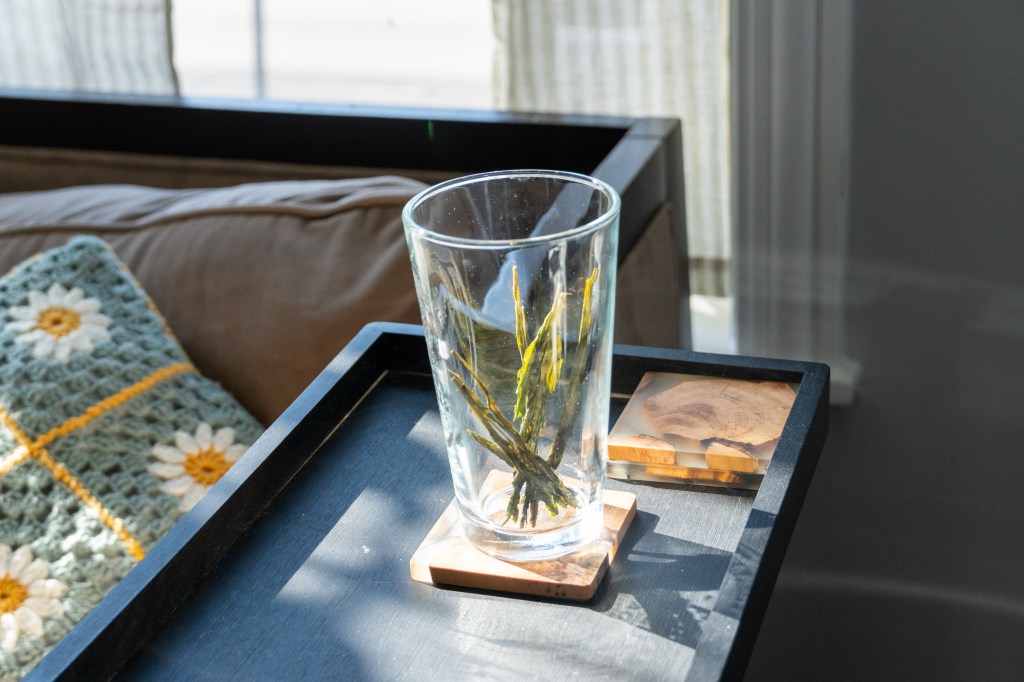
The leaves are long, pressed spears with a clean, uniform shape. Each spear appears intentionally shaped. There’s a strong midrib line and a tidy silhouette rather than broken bits. The color leans yellow-green to olive-green, with a satin matte finish that looks baked and set.
Dry aroma
Fresh green sweetness with a light sugarcane edge
First pour
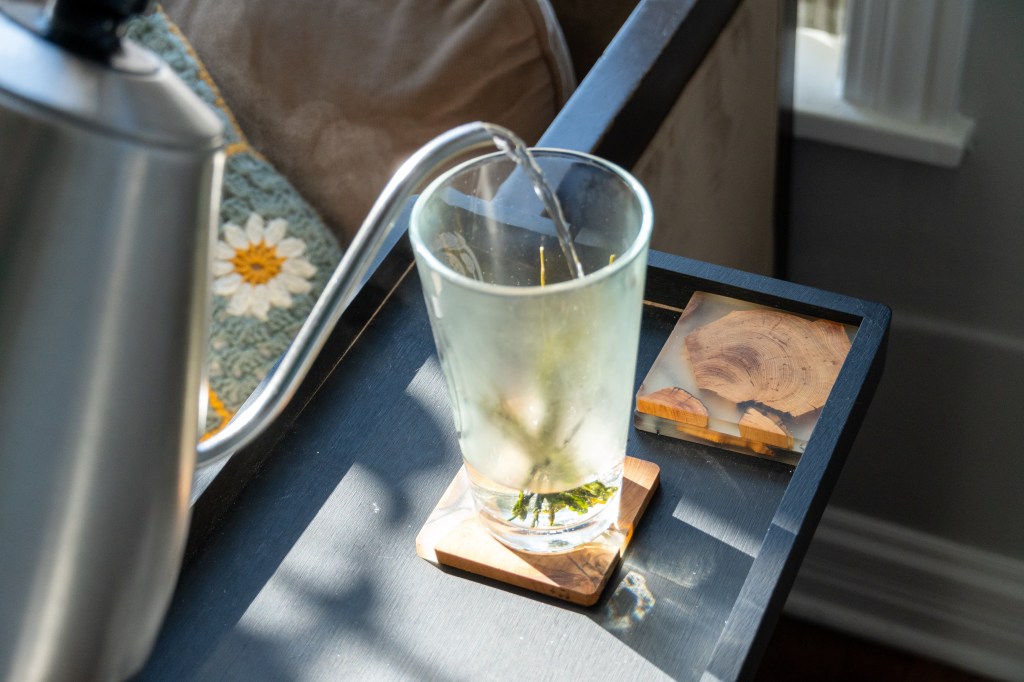
Vapor aroma: snow peas, bean sprouts, cane sugar
Leaf movement: spears float first, then tip and sink as they become saturated. A few stand upright before unfurling.
Liquor color: pale and clear, then faint straw as it builds
Sip 1. First drinkable temperature
Time: 2:20
Aroma: orchid depth
Flavor: fresh bright greens
Texture: silky
Astringency: none
Sweetness: mid-palate
Finish: long. Savory freshness lingers
Sip 2. Early session
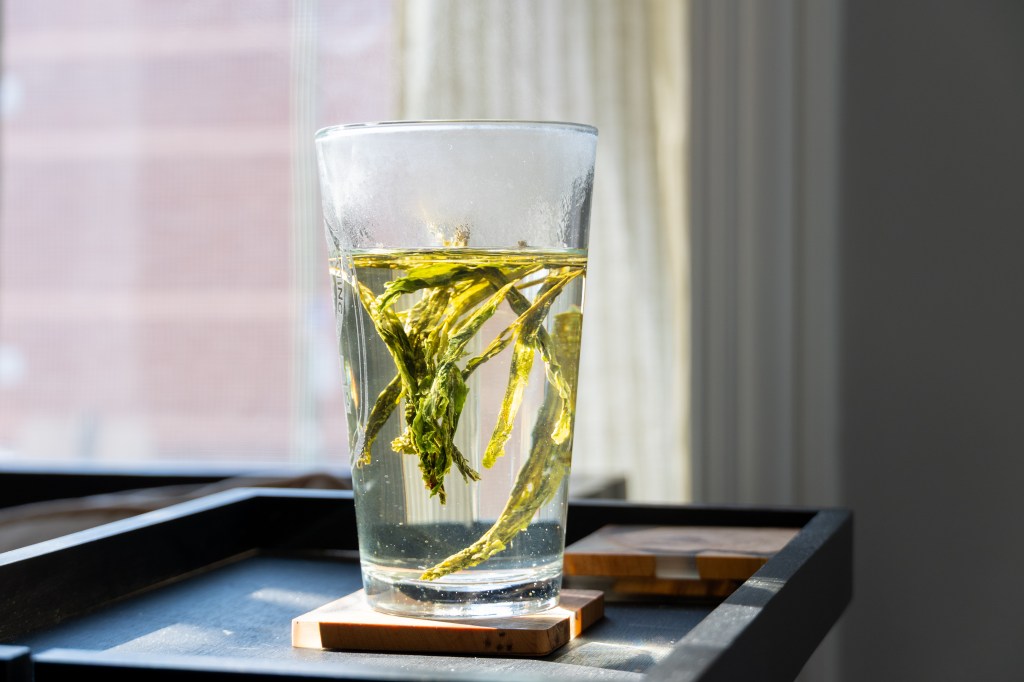
Time: 5:06
Aroma shift: blanched green beans
Flavor shift: cooked spinach and tender stem greens
Texture: silky to medium-bodied, still clean
Sharpness: none
The leaf begins opening, and the cup broadens in flavor and aroma.
Sip 3. Mid-glass
Time: 9:02
Liquor: pale straw yellow with a green tint
Core flavor: edamame
Supporting notes: bamboo, orchid depth, umami, mineral
Balance: savory leads, sweetness follows. Crisp vegetal presence
Mouthfeel: rounder now. Light-broth feel, then exits cleanly
Finish: long
Sip 4. Late-glass. Pre top-off
Time: 12:43
Stayed consistent: green bean and nutty warmth
Faded first: the thin, silky feel. It turns wholesome fast
Dryness: slight
Bitterness: none
Top-off 1
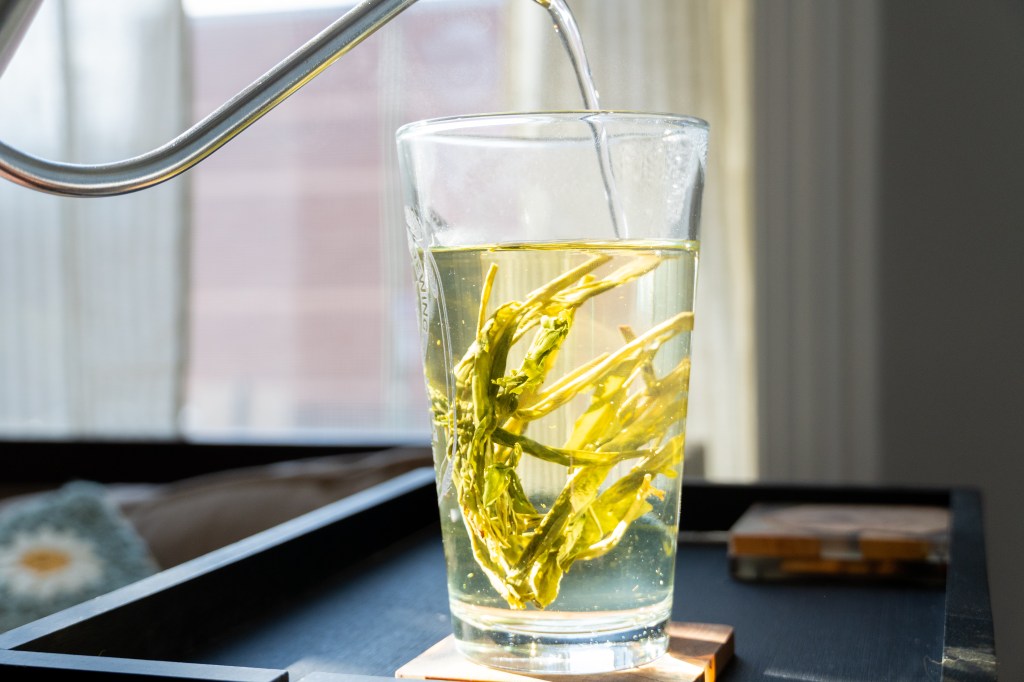
Time: 20:36
Water: 93°C
Immediate aroma: water chestnuts
Leaf: mostly unfurled
Sip 5. Post top-off 1
Time: 2:20
Aroma: floral lift returns
Flavor: pine nut
Texture: dryness grows, adding structure
Astringency: low, supportive
Finish: long
Sip 6. Midway after top-off 1
Evolution: broccoli, boy choy
Umami: medium
Sweetness: sugarcane, then honey
Mineral: present and clean
Top-off 2
Time: 31:14 (glass at one-half)
Shift: brighter, more floral
Leaf: leaves face downward, stems upward. Leaves mostly unfurled
Sip 7. Post top-off 2

Time: 35:00
Flavor: meadow grasses, steamed greens, nutty warmth
Texture: brisk
Finish: Savory, nutty flavors give way to a lingering sweetness. Brisk and clean.
Sip 8. Final stretch
What it becomes: the tea shifts between verdant green, sugar, nut, and savory, inviting curiosity about how flavors develop sip by sip.
Signature that remains: orchid depth remains through the end
Spent leaf
Integrity: slender spears unfurl into full leaves
Color: consistent sun-kissed pistachio yellow-green
The leaf holds through a long session. The color remains even and the structure intact.
Final Thoughts
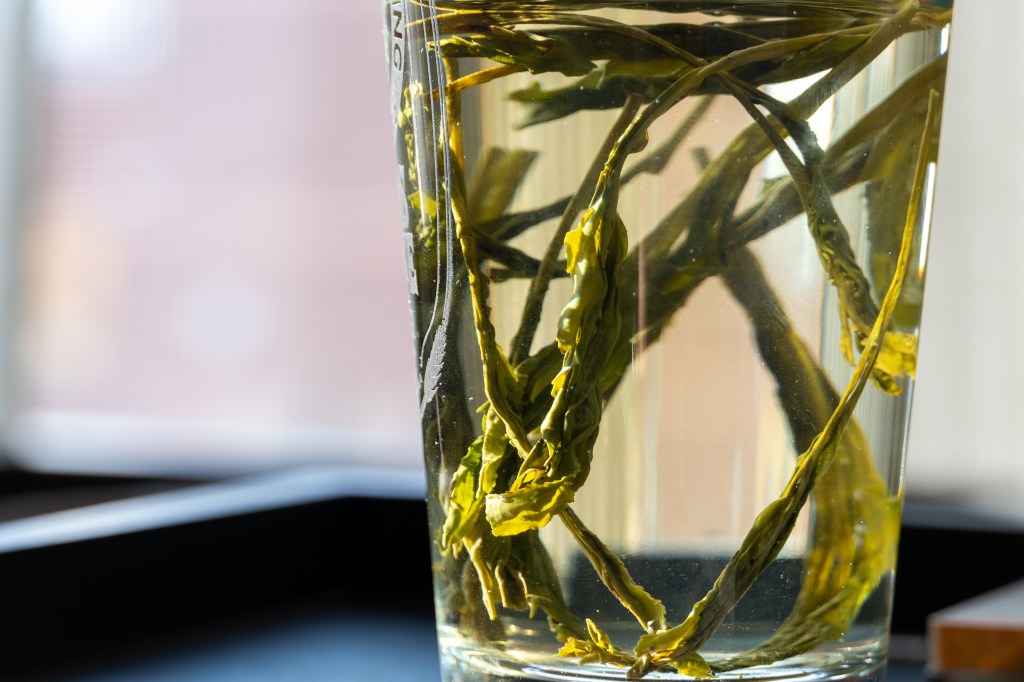
The best moment in this session comes from the sugars present in the stems and the body they create in the cup. The most distinctive feature is the depth of orchids paired with a savory, steamed-green clarity, complemented by a nutty warmth that returns in waves. The finish remains clean, and the tea continues to evolve even after the glass refills multiple times.
In the next session, I plan to lower the water temperature to around 90-92°C to achieve a slower, softer progression with more time in each phase.
This tea is perfect for someone who wants to take their time with a glass, whether alone or with friends. You can savor each sip with focus, or enjoy it more casually and still experience its rewards. The structure and finish will keep drawing you back in. My only regret is not diving into my stash of this tea sooner!
Steep well,
Marco


 STEAP'D
Leave a comment