
There’s a unique allure in teas that tell a story, and the Barrel-Aged Red from Volition Tea’s Trapped in Amber series is one such narrative that intertwines tradition, innovation, and science. This tea isn’t a flavor gimmick; it’s about the journey from leaf to cup and the meticulous processes that transform it along the way.
Meeting the Visionaries
The exploration begins with the Xie brothers—Rong Fu and Rong Wei—in the verdant landscapes of Songxi, Fujian, China. Their organic tea garden is a sanctuary of biodiversity, hosting over 30 species of trees and five kinds of grass. Their dedication to sustainable agriculture doesn’t just preserve the environment; it enriches the very essence of their teas.
Collaborating with them is Annie Xiang of Volition Tea, whose vision to push the boundaries of specialty tea led to this innovative project. Partnering with FEW Spirits, a grain-to-glass distillery in Evanston, IL known for their bold bourbons, they embarked on an experiment to age Zhenghe Red tea in bourbon barrels—a fusion of tea craftsmanship and spirit maturation.
The Science Behind Barrel Aging
Understanding how the barrel impacts the tea during aging requires delving into the chemistry of wood and its interaction with the tea leaves.
1. Porous Oak Interaction
Oak barrels are chosen for their porous nature, allowing subtle exchanges between the tea leaves and the wood. The tea absorbs compounds from the barrel, including:
- Vanillin: Imparts sweet vanilla notes.
- Lactones: Contribute creamy, coconut-like flavors.
- Phenolic compounds: Add complexity and depth.
These compounds originate from the lignin and cellulose in the wood, which break down over time and infuse the tea with nuanced flavors.
2. Residual Bourbon Influence
The freshly emptied bourbon barrels retain traces of the spirit, which introduces additional flavor elements:
- Caramel and Toffee: Derived from caramelized sugars in the bourbon.
- Spice Notes: Hints of nutmeg, cinnamon, and oak spices enrich the profile.
3. Micro-Oxygenation
The slow ingress of oxygen through the wood affects the tea by:
- Softening Tannins: Reduces astringency, leading to a smoother mouthfeel.
- Enhancing Aromas: Promotes the development of new aromatic compounds through oxidation.
4. Temperature Fluctuations
Over eight months, natural temperature variations cause the wood to expand and contract, which:
- Facilitates Flavor Absorption: Drives the infusion of wood compounds into the tea.
- Balances Moisture Content: Affects the texture and preservation of the leaves.
Tasting Experience
Using my 150 mL gaiwan, I measured 5 grams of the Barrel-Aged Red and heated spring water to 200°F (93°C).
Visual Examination
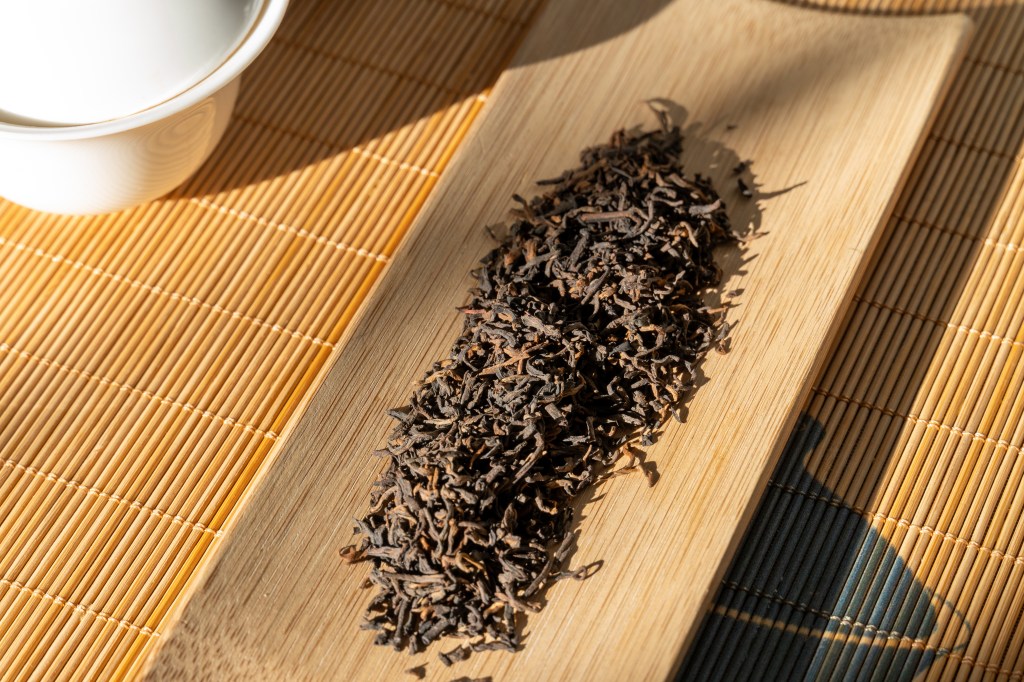
The dry leaves display a rich tapestry of deep browns with auburn highlights, a testament to their time in the barrel. They’re slightly broken from the rotations during aging, adding a rustic charm.
Aroma of Dry Leaves
Bringing the leaves, warmed from the gaiwan, to my nose, I’m enveloped by sweet notes of vanilla and oak, intertwined with whispers of warm spices and a subtle hint of caramel from the bourbon influence.
First Infusion
- Liquor Color: A luminous amber, clear and inviting.
- Aroma: The wet leaves release intensified notes of vanilla and toasted oak.
- Taste: The initial sip is smooth and full-bodied. Vanilla leads the way, followed by gentle warmth reminiscent of bourbon without the alcohol. A subtle sweetness lingers, balanced by the richness of the Zhenghe Red.
- Mouthfeel: Velvety and coating, leaving a pleasant warmth.
- Aftertaste: Lingering notes of caramel and mild spice that fade gracefully.
Second Infusion
- Liquor Color: Slightly deeper amber.
- Aroma: Oakiness becomes more pronounced, with emerging hints of dried fruit.
- Taste: Flavors deepen. Oak and spice take center stage, with vanilla still present but more subdued. A hint of dark chocolate bitterness adds complexity.
- Mouthfeel: Smooth with a slight tannic grip.
- Aftertaste: A pleasant dryness with echoes of oak and spice.
Third Infusion
- Liquor Color: Crimson amber as the tea’s strength grows.
- Aroma: Gentle wood notes with a faint sweetness.
- Taste: Milder flavors emerge. The oak and vanilla recede, revealing a subtle maltiness that reflects the base characteristics of the Zhenghe Red.
- Mouthfeel: Silky and light.
- Aftertaste: Clean finish with a gentle reminder of the bourbon barrel’s influence.
Reflecting on the Journey
Barrel-Aged Red is a powerful blend of tea and bourbon nuances, crafted through a meticulous aging process that leverages the science of wood chemistry and oxidation. Each infusion reveals different facets, from the prominent vanilla and oak in the first steep to the underlying richness of the tea itself in later brews.
Understanding the science enhances my appreciation of this tea. The extraction of compounds like vanillin and lactones from the oak barrel significantly shapes the aroma and flavor profile, creating a unique sensory experience.
Pairing Suggestions
This tea pairs wonderfully with:
- Dark Chocolate Truffles: Accentuate its sweetness and vanilla notes.
- Roasted Almonds: Complement the oak and spice flavors.
- A Quiet Evening: Perfect for savoring and reflecting on the complexities within the cup.
Conclusion
Barrel-Aged Red exemplifies how tradition and innovation can coalesce to produce something extraordinary. It’s a tea that invites exploration—not just of its flavors but of the intricate processes that bring it to life. It is a testament to the dedication of the Xie brothers, the vision of Annie, and the craftsmanship of FEW Spirits. Stay tuned as I delve into the next teas in the Trapped in Amber series, where we’ll explore the infusion of florals in Gardenia Red and its delicate artistry.
Steep well,
-Marco


 STEAP'D
Leave a comment