I’m sitting at home in Chicago seeking solace from the -20 to -40 wind chills today, so a bold ripe Pu-erh is calling. Gong Ting (宫廷) often shows up on ripe Pu-erh labels as a promise of “top grade”. Though it sounds like a guarantee in quality, it is not.
In most ripe Pu-erh contexts, Gong Ting points to leaf grade, meaning the material skews bud-heavy and fine-textured. Grade tells us what the leaves look like and how they are sorted. Our tasting informs us if the tea was fermented, blended, and stored well.
Today, I’d like to do two things:
- Provide you with a simple way to understand Gong Ting in ripe Pu-erh grades.
- Walk you through my tasting of a 2025 Gong Ting Pu-erh from Masters by Adagio Teas
What ripe Pu-erh “grades” describe
When people talk about ripe Pu-erh grades, they typically mean sorting by:
- Bud content
- Leaf size and tenderness
- Overall fineness of material
Higher grades tend to include more buds and smaller, more tender leaf material. Lower grades often include larger leaves and more mature material.
This system gets shared as a 10-grade ladder, with Gong Ting near the top. It helps us predict extraction and texture, while not scoring the tea’s overall quality.
What “Gong Ting” tends to mean in the cup
A Gong Ting ripe Pu-erh often brews with:
- Fast extraction. Short infusions give us a lot
- Dark and bold liquor early in the session
- A thicker, smoother body when fermentation is “clean”.
- Lower bitterness, since bud-heavy material can skew soft and rounded
It also comes with a common risk I have to remind myself of when serving: the fine material releases quickly, and it’s easier to push the tea into a “muddy” or heavy profile if oversteeped!
Grade is not a quality guarantee
Here’s what the Gong Ting label does not promise:
- Clean fermentation
- Good storage
- Balanced flavor
- Strong endurance or life across many infusions
You’ll find that two Gong Ting teas can taste nothing alike. One can be silk and sweet, another dull, sour, or rough. The label tells us what the material likely is, and the cup tells us if the tea is good.
How I evaluate a Gong Ting ripe Pu-erh
When I taste a Gong Ting, I look for four things.
- Clarity
Dark liquor does not need to taste dirty. I look for clean depth.
- Fermentation cleanliness
I want a ripe profile that feels stable and resolved. I watch for sourness, swampy notes, or anything “fishy”, especially in the rinse and early infusions.
- Texture
Gong Ting earns its keep through mouthfeel. I want a thick and smooth finish, not dry.
- Endurance
I want the tea to hold its structure over multiple rounds. Of course, it can shift, but it should not collapse or diminish.
With this context and my recommendations, I can’t wait to break into the Gong Ting Pu-erh from Masters by Adagio Teas.
The Tea
Tea: Gong Ting Puerh
Type: Shu Pu-erh
Grade claim: Gong Ting (宫廷)
Year: April 2025
Origin: Yunnan, China
My brewing parameters
Vessel: Gaiwan
Leaf: 2.5g/50mL
Water: 99 °C
Rinse: Yes, flash
Infusions: 6+, 10 sec +5
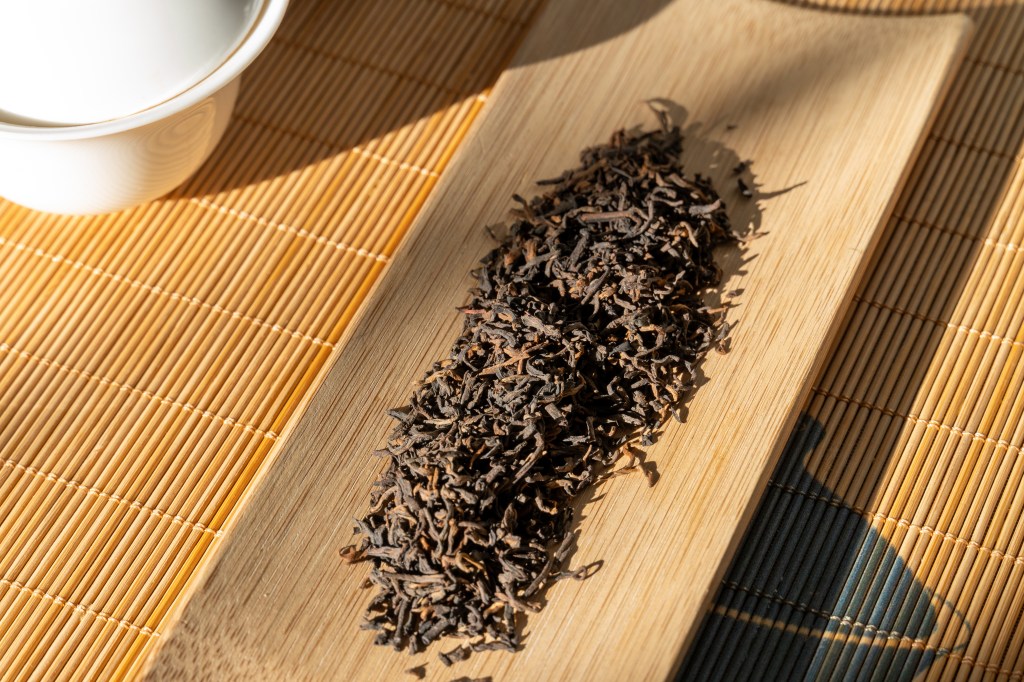
Dry leaf
Appearance:
Tippy, walnut-brown leaves and mahogany to cherry-copper buds. The pieces sit evenly in length with some stems present.
Aroma:
A light hint of spice and cocoa powder.
What I’m looking for here is alignment with the grade claim. Fine material, visible buds, and not thick stems and coarse leaves. This batch leans in the right direction. The buds read clearly, and the stems stay at a minor count.
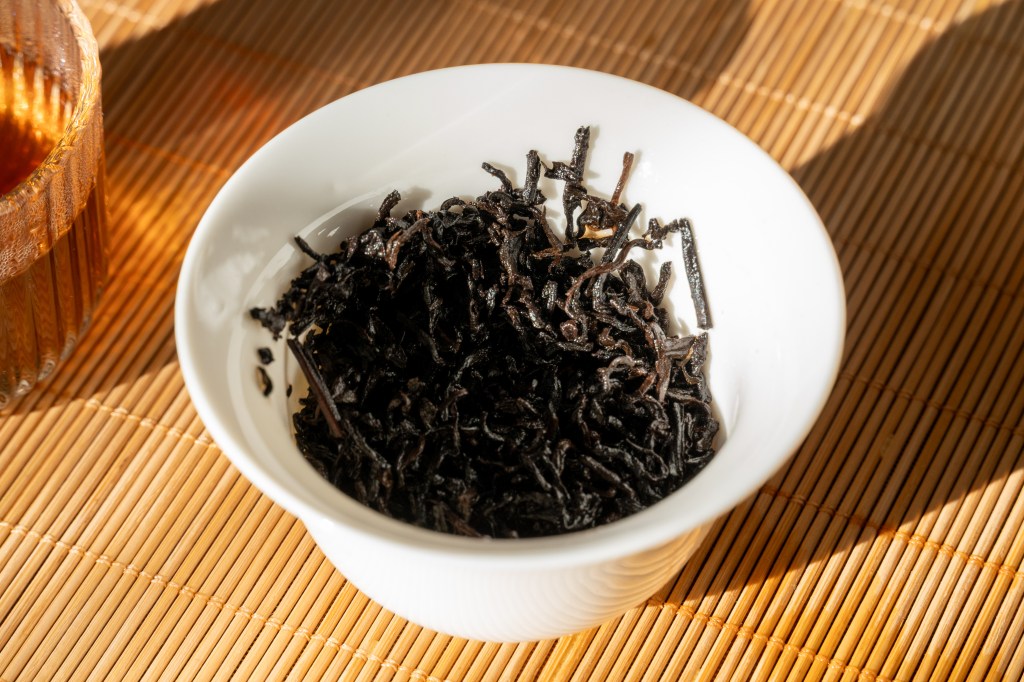
Rinse
I’m treating this as a quick diagnostic.
Warm aroma from the lid:
Late-spring rain, forest, moss, anise, and earth.
If there’s going to be an off-note, it often shows up right here. Clean Gong Ting reads to me as sweet, cocoa-like, or gently earthy, not sour or murky. In this case, the rinse stays clean and grounded.
Infusions 1 to 2
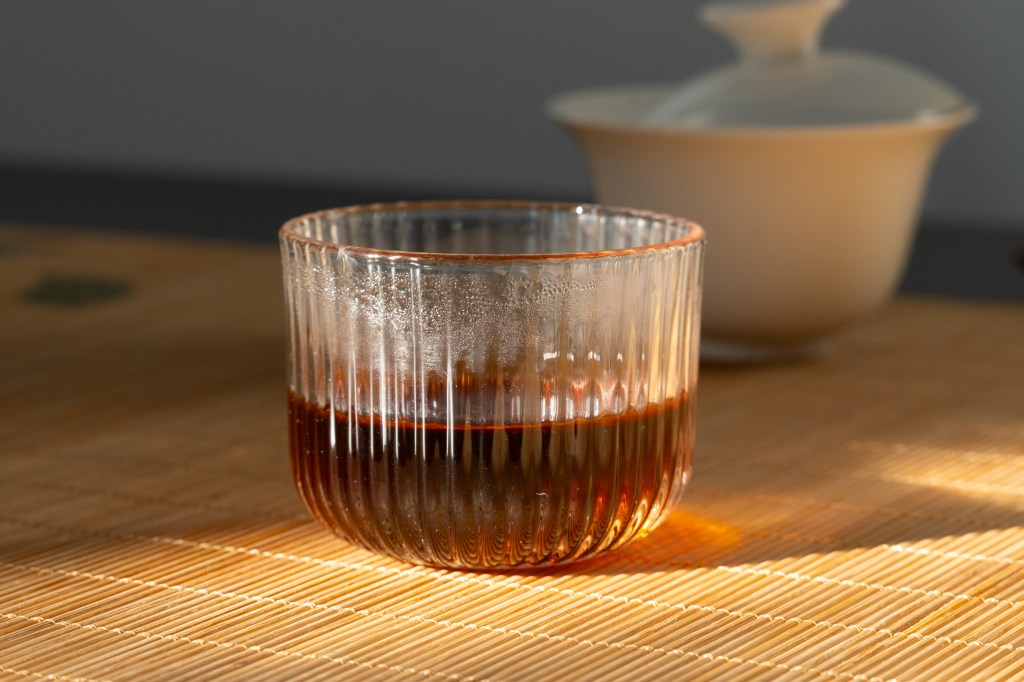
Liquor:
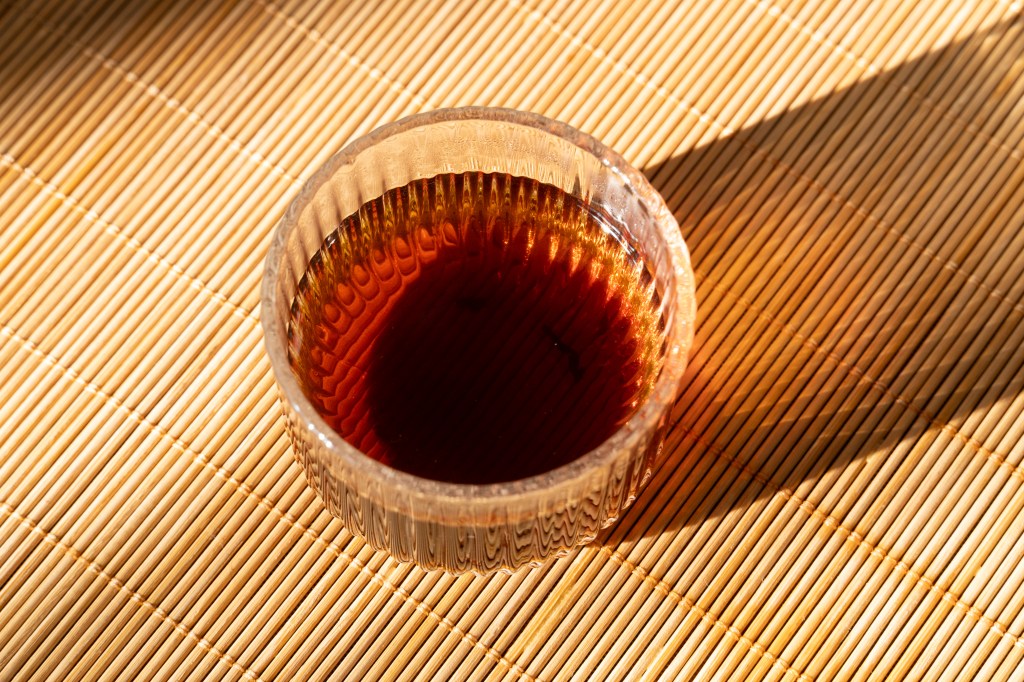
Deep amber. Dense and almost soupy. A stewed stone fruit sweetness rises early.
Taste and Texture:
Medium-bodied and smooth.
My goal here is to experience depth without heaviness. So far, these first rounds deliver!
Infusions 3 to 5
This range is where many Gong Ting teas show their best balance.
Aroma:
Wet wood, warm spice, clean earth.
Taste:
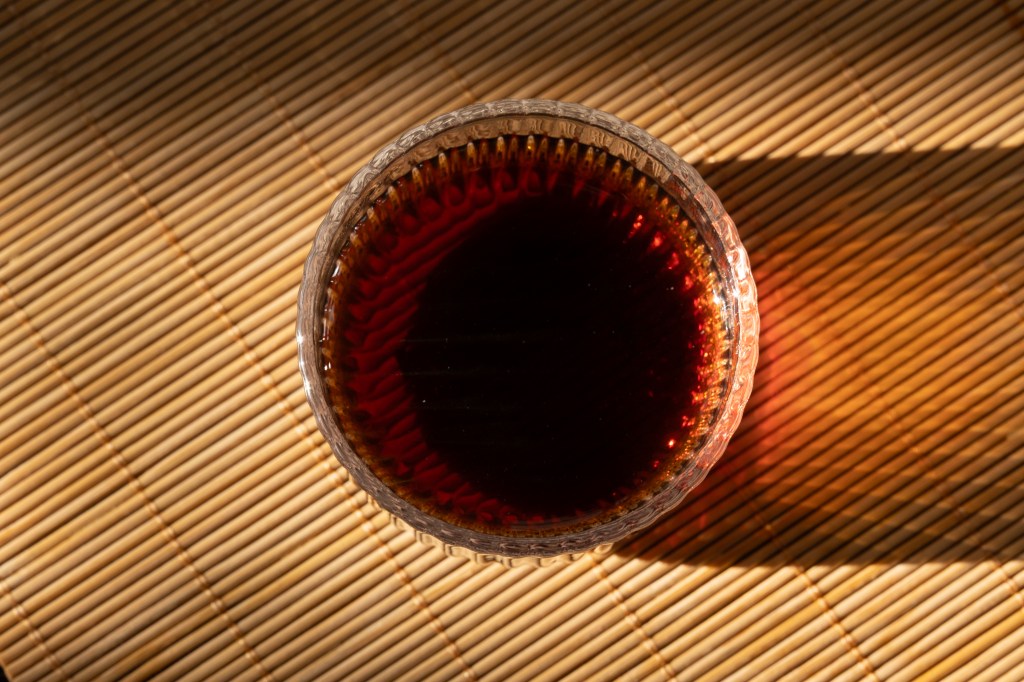
Brown sugar and nut butter move forward with a nice spice, remaining consistent.
Texture:
Soupy and wholesome.
Aftertaste:
Lingering sweetness that stays with me between sips.
This part of the session answers the key question for me: does the tea develop dimension, or does it hold one note and coast? Here it is consistent, building a clear core of sweetness, nutty warmth, and clean earth.
Infusions 6 +
Later steeps reveal whether the tea was built to last or impress early.
What stayed consistent:
Earth and spice profiles hold steady.
What dropped off first:
Nutiness fades first.
How the finish changed:
Brighter with a spice that increased in presence. Never muddy, a dryness develops on steep eight.
I see the late-stage dryness as a taper, signalling the session is moving into its final stretch through structure.
Final Thoughts
This Gong Ting Shu delivers what I would want from the grade claim:
- Fast, clean extraction
- Dark liquor without heaviness
- A steady arc in experience
- No muddy collapse, even as the tea fades
If you enjoy ripe Pu-erh with a “soupy” body, clear earth, warm spice, and a sweet finish, this one is for you. It’s approachable and realistic in presenting the grade, without diving into the deep end.
If you do decide to add this tea to your collection, let me know your experience and tag me on Instagram @steapd_tea, @mastersteas, and use the hashtags: #masterstea #looseleaftea
Steep well,
Marco Namowicz


 STEAP'D
Leave a comment